Key takeaways
- Every shipment travels with a set of documents that together prove what was shipped, where it came from and who owns it.
- The bill of lading is the document that controls the cargo, so its wording has to match the contract and the letter of credit.
- Which certificates are needed depends on the commodity and on the import rules of the destination country.
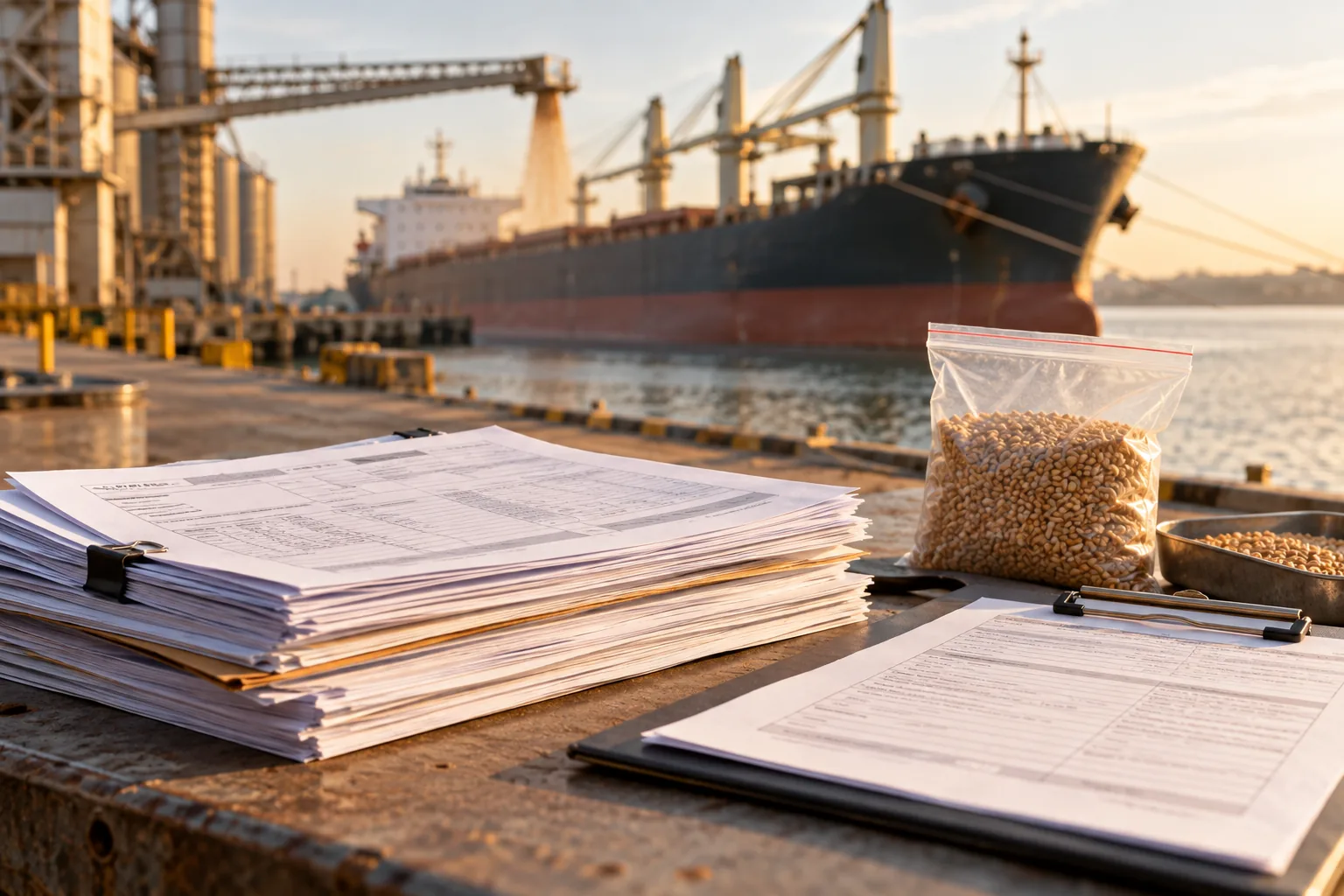
A physical trade is only finished when the buyer can take the cargo off the ship and through customs. That depends as much on paper as on the cargo itself. This note explains the documents that usually travel with an agricultural shipment and what each one is for.
The commercial invoice
The commercial invoice states what was sold, in what quantity, at what price and on which trade terms. Customs at the destination use it to assess duty, and banks use it to check a payment under a letter of credit.
The bill of lading
The carrier issues the bill of lading when the cargo is loaded. It is a receipt for the goods, evidence of the contract of carriage and, in most cases, the document that controls the cargo. Whoever holds the original can claim the goods at the discharge port. Its wording has to match the contract and any letter of credit exactly.
The certificate of origin
The certificate of origin states where the goods were produced. Customs use it to apply the right duty rate and to check any trade restrictions.
Phytosanitary and health certificates
Plant products such as grain, pulses and oilseeds usually need a phytosanitary certificate from the exporting country's plant health authority. Dairy products need a health certificate instead. Some destinations also ask for a fumigation certificate.
The inspection certificate
An independent inspection company samples the cargo at loading and reports on the agreed specification and quantity. The buyer relies on it to confirm that what was loaded matches the contract.
The packing list
For bagged or containerised cargo, the packing list shows how the goods are packed and marked, container by container.
Why the details matter
The final set of documents depends on the contract, the commodity and the destination country's import rules. A mismatch between documents can hold up payment or clearance, so we agree the list and the wording with the buyer before the cargo is loaded.
Sources
Figures in this article come from these sources, as published on the dates shown.


